Teaching Portfolio
This portfolio showcases a selection of lesson plans, unit plans, assessments, and classroom projects developed throughout my Bachelor of Education program and field experiences. While the primary focus is music education, it also includes examples from mathematics and technology literacy to demonstrate my ability to design engaging, student-centred learning experiences across multiple subject areas. Together, these artifacts highlight my approach to instructional planning, assessment, creativity, relationship building, and meaningful student learning.
Student-Centred Concert Band Composition
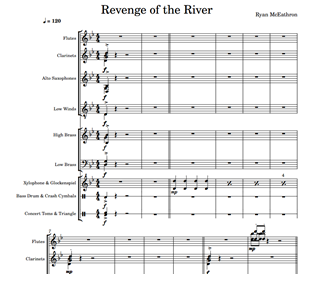
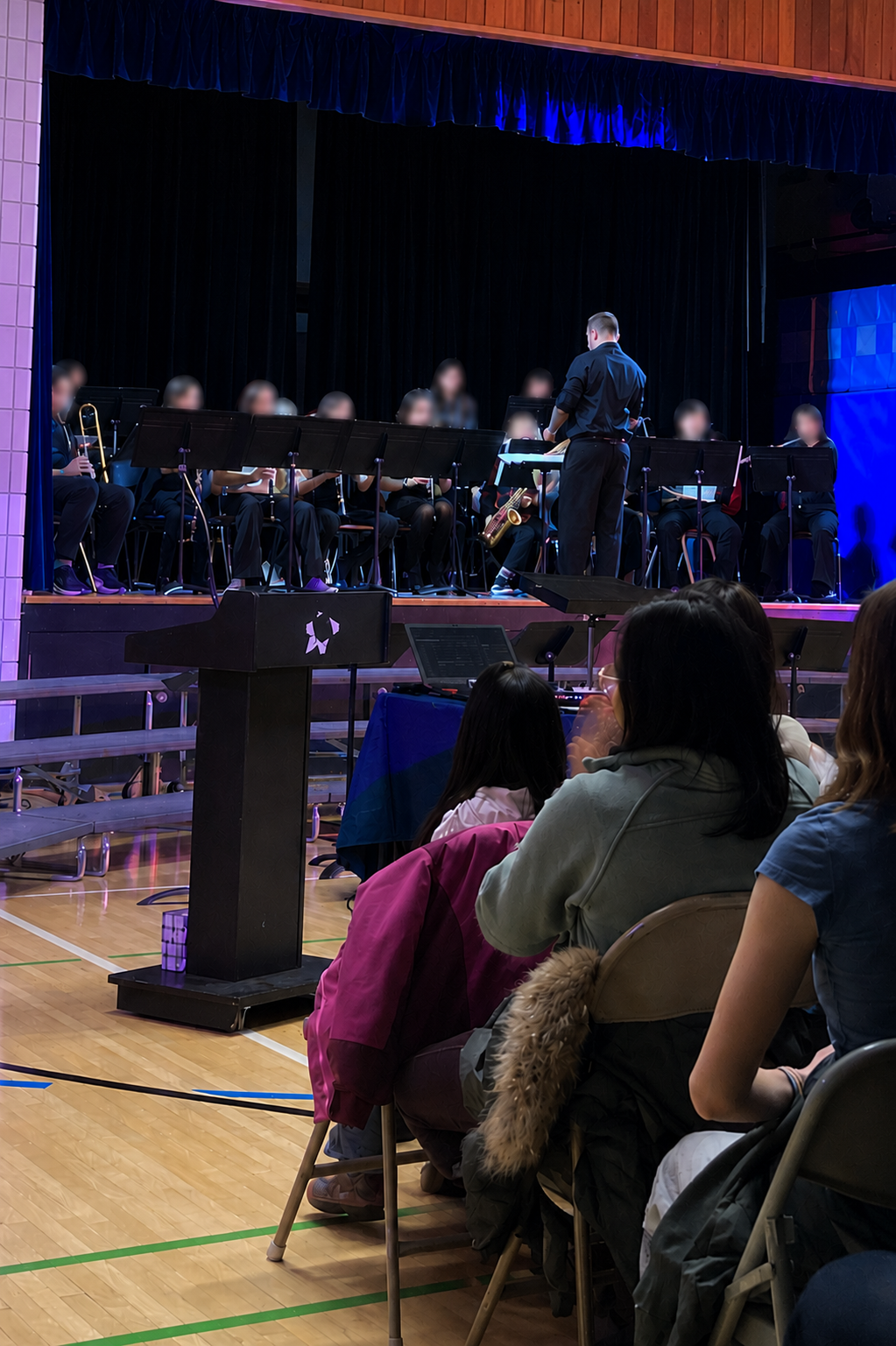
Grade 6-9 Band · Ensemble WorkRevenge of the River is an original concert band composition written during my university field placement as part of my Bachelor of Education program. The piece was composed specifically for a Grade 6–9 band and features 22 unique parts, each tailored to the abilities and musical growth of the individual students in the ensemble. Throughout the composition process, students provided feedback on the level of difficulty they wanted in their parts, allowing me to adjust the music so each student could experience an appropriate level of challenge while building confidence. Students also chose the title, Revenge of the River, giving them a sense of ownership over the piece before premiering it at their year-end concert in June 2026. The accompanying recording is a digital playback created in MuseScore 4 and is included as a representation of the score.
Beginning Ukulele: Chords, Rhythm, and Melody
Grade 5 General Music · Unit PlanIn this ukulele unit, students will learn how to tune and properly hold the ukulele, read basic notation and tablature, and perform both single-note melodies and chord accompaniments. Instruction will be structured progressively, beginning with instrument familiarity and simple plucking patterns, then moving into reading music, chord formation, and strumming techniques applied through increasingly complex repertoire. Students will develop foundational musical skills including rhythm, melody, chord transitions, and ensemble playing through guided instruction and play-along activities. The unit will culminate in a performance assessment of Ode to Joy and Wake Me Up, where students will demonstrate their ability to perform melodies and chord progressions with accuracy, steady rhythm, and appropriate technique.
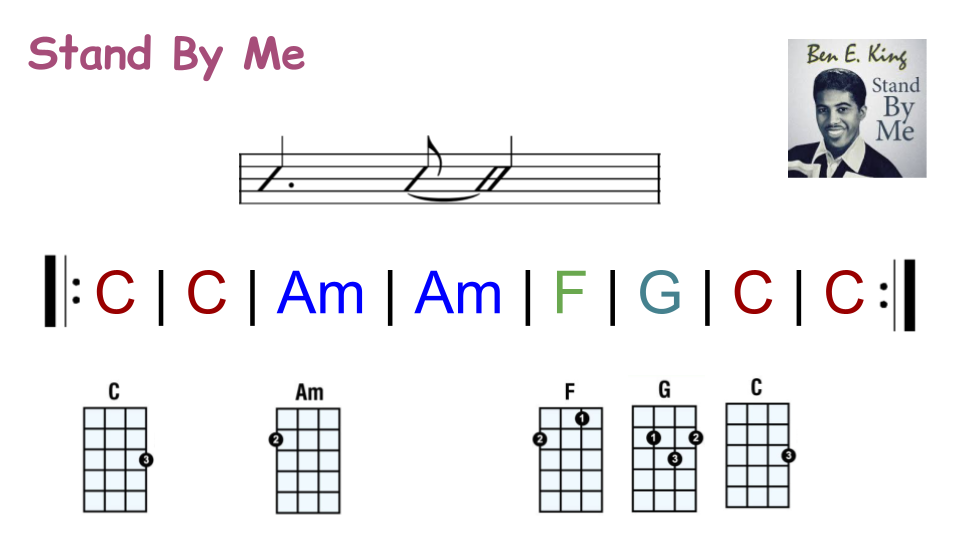
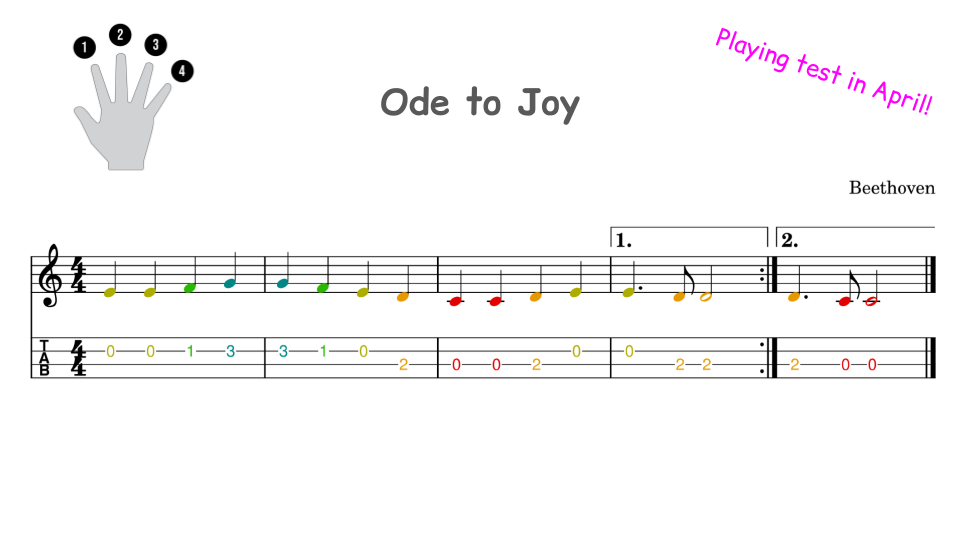
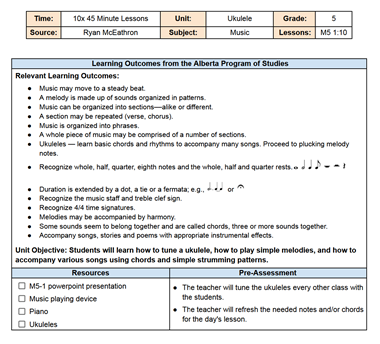
Sample slides from the Grade 5 ukulele unit.
“Soda Pop” for Handbells
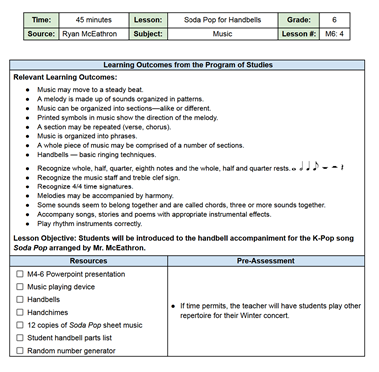
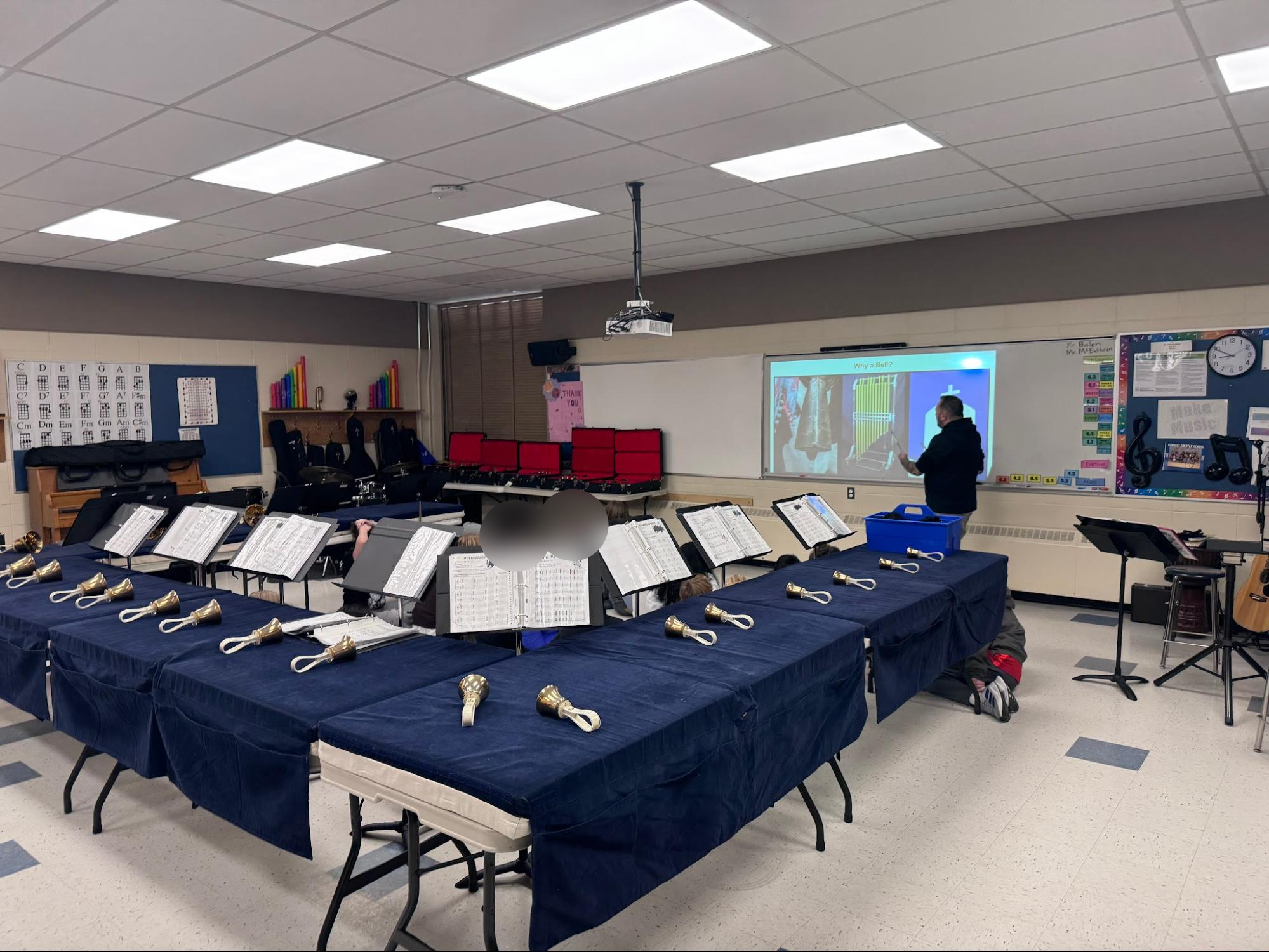
Grade 6 General Music · Lesson PlanIn this lesson students will learn and perform Soda Pop from the movie KPop Demon Hunters through structured ensemble rehearsal and guided instruction. Students will be introduced to their assigned parts and will begin with a warm-up using previously learned repertoire, Westminster Chimes. The class will rehearse the chorus of Soda Pop, before moving into additional sections of the piece as time allows. Students will engage in guided practice using a backing track that can be adjusted in tempo to support learning and rehearsal needs, and will be introduced to basic musical concepts such as transposition, rehearsal markings, and repeat signs.
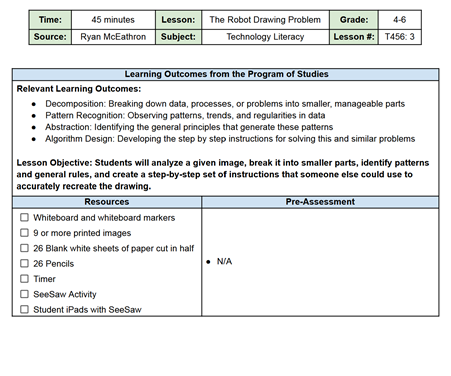
The Robot Drawing Problem: Computational Thinking Through Clear Communication
Grade 4-6 Technology Literacy · Lesson PlanThis lesson develops students computational thinking by challenging them to write precise, step-by-step instructions for recreating an image without naming the object. Students analyze visual patterns, break complex images into smaller components, and refine their instructions through multiple rounds of peer testing and feedback. By experiencing how different classmates interpret their directions, students learn the importance of precision, sequencing, and descriptive language while applying the principles of algorithm design. The lesson integrates collaboration, formative assessment, and iterative improvement to strengthen both communication and problem-solving skills.
View Larger
View Larger
View Larger
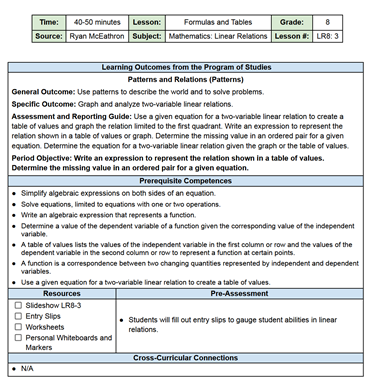
Linear Relations: Formulas and Tables
Grade 8 Mathematics · Lesson Plan and AssessmentThis lesson builds on students' prior understanding of linear relations by developing their ability to identify and write equations from tables of values. Through guided instruction, whiteboard practice, collaborative examples, and independent work, students strengthen their understanding of numerical coefficients, variables, and constants while representing linear relations as algebraic expressions. The accompanying slideshow provides scaffolded examples that gradually transition students from teacher-led demonstrations to independent problem solving, while formative assessment through whiteboards, worksheets, and exit slips allows understanding to be monitored throughout the lesson.